
Why Humans Are Born Rhythmic (Even If You Were Told Otherwise)
Jan 08, 2026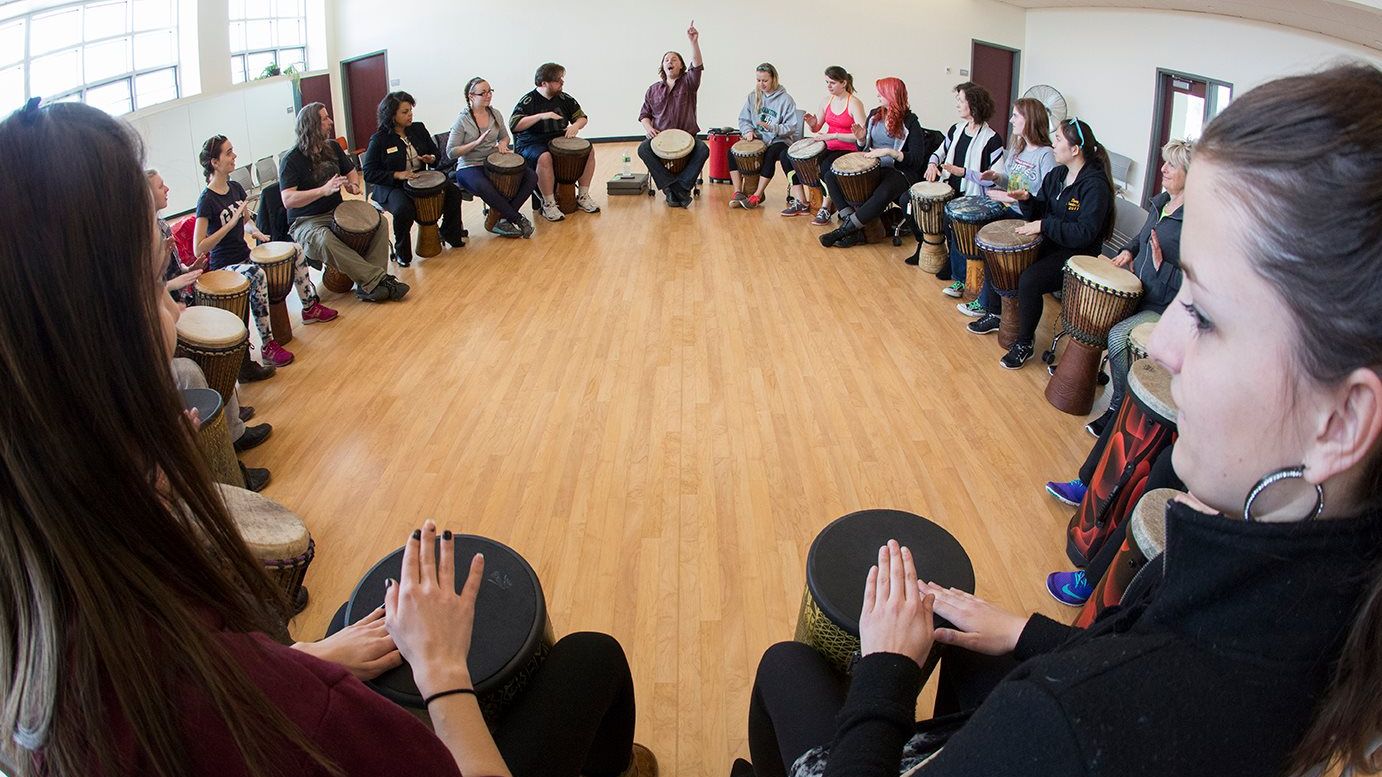
If you’ve spent any time in one of my workshops, trainings, or even a short mini-course, you may have noticed something subtle.
We don’t start by proving anything.
We start by letting something simple happen long enough for it to organize itself.
That’s not an accident.
The Myth Most People Carry
One of the most persistent myths people carry into rhythm work is the idea that rhythm is a talent you either have or don’t.
That some people are “musical,” and everyone else is just hoping not to be exposed.
View my schedule is here!
https://www.jimdonovantrainings.com/jim-donovan-live-event-schedule
What matters here is this: that belief doesn’t come from biology.
It comes from experience.
Rhythm Comes Before Language
Humans are born rhythmic.
Not metaphorically.
Literally.
The brain develops around timing long before it develops language.
Before words mean anything, the nervous system is already tracking repetition, predicting intervals, and coordinating movement in time.
That’s how perception stabilizes.
That’s how learning begins.
Rhythm isn’t an add-on skill.
It’s a foundational organizing process.
Your heart, your breath, your attention, and your movement all depend on timing relationships.
Even your sense of safety is shaped by whether the nervous system can accurately predict what’s coming next.
This is why rhythm matters so much.
It’s also why rhythm can feel so loaded.
Recognition, Not Learning
One of the most consistent things I see across groups is what happens when that noise quiets down.
Not through encouragement or confidence-building.
Through structure.
Through a steady reference.
Through enough repetition that the nervous system no longer has to guess.
People don’t suddenly “learn” rhythm in those moments.
They recognize it.
Here’s where the science lines up with experience.
The nervous system is always working to reduce uncertainty.
When timing is unpredictable, the system stays alert.
When timing is clear and steady, energy can shift toward coordination, perception, and learning.
This is why slow, predictable rhythm isn’t a beginner’s crutch.
It’s a biological necessity.
Steadiness gives the brain something reliable to entrain to.
Once that entrainment is in place, complexity doesn’t feel threatening.
It feels interesting.
Why Conditions Matter More Than Talent
This is also why complexity introduced too early tends to backfire.
Without a stable internal pulse, variation just increases cognitive load.
It asks the system to solve problems before it has an anchor.
When people struggle with rhythm, it’s rarely because they can’t do it.
It’s because the conditions haven’t supported it yet.
Rhythm is relational.
It depends on timing that’s clear enough to trust.
Repetition that’s long enough to settle into.
And an environment where attention can stay in the body instead of scanning for correction.
That’s not about being gentle.
It’s about being accurate.
Designing for How Humans Actually Learn
This is why I design experiences the way I do.
Why we repeat more than we vary.
Why the groove comes before the explanation.
Why the body is given something reliable before the mind is asked to analyze.
It’s not a stylistic choice.
It’s alignment with how humans actually learn.
If rhythm feels available to you now in a way it didn’t before, that doesn’t mean you suddenly acquired a new ability.
It means the system finally had what it needed to show you what was already there.
The Part That Lasts
And if there’s still a part of you that wonders whether that sense of ease is fragile or temporary, this matters:
Recognition changes things.
Once the nervous system has experienced reliable timing, it doesn’t forget it.
It may get obscured again under stress or speed.
But the reference point exists.
From there, returning to rhythm becomes less about effort and more about remembering where to place your attention.
That’s the work.
Not becoming rhythmic.
But learning how to stop getting in the way of something your system already knows how to do.
—Jim
Author
