
Why Drumming Makes You Trust Strangers Fast
Dec 09, 2025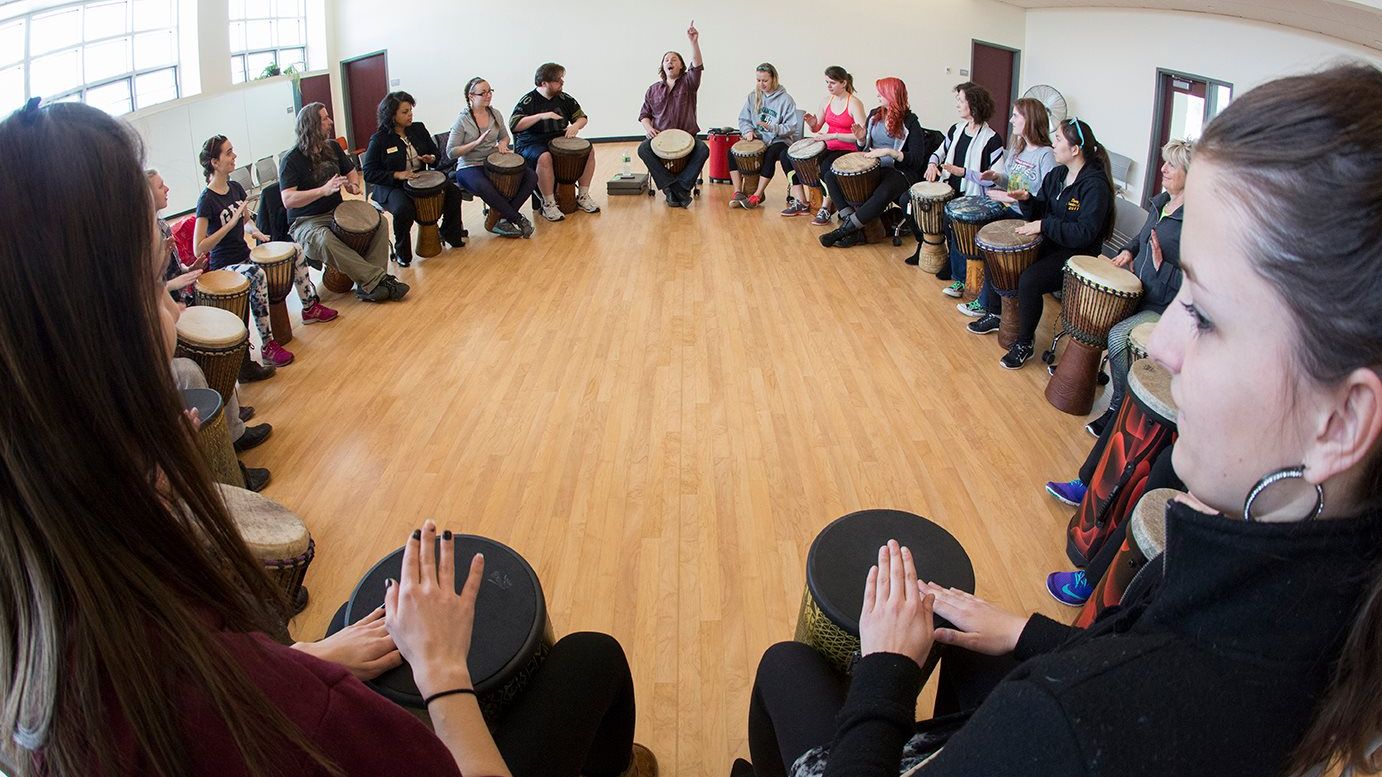
The first time I saw it happen, the circle had barely played thirty seconds of a steady groove.
A room full of strangers who walked in quietly were suddenly leaning forward, matching each other’s timing without even noticing.
There was a softening in the room—nothing dramatic, just a subtle sense that people felt safer than they did a moment ago.
That shift is not imagination.
It’s physiology.
When you drum with strangers, your brain locks onto the pulse through a process called neural entrainment, where internal oscillations sync to an external beat [1].
As soon as the beat becomes predictable, your brain stops burning energy trying to anticipate what comes next.
That reduction in uncertainty lowers activation in threat-detection systems and frees the body to settle [2].
You can feel this almost instantly as your hands begin finding a steadier arc and your breath falls into a more even pattern.
But something even more powerful is happening between the people in the room.
Studies show that when humans move rhythmically in sync—even very simply—endorphins increase and social bonding activates quickly [3].
This means your nervous system is receiving a chemical nudge toward connection, even with people you’ve never met.
Research by Koole and Tschacher shows that interpersonal synchrony also reduces anxiety and increases a sense of interpersonal ease [4].
So when the groove lines up, your body isn’t just hearing rhythm.
It’s reading the room as safe.
It’s interpreting shared timing as shared intention.
Inside the circle, heart rhythms begin adjusting too.
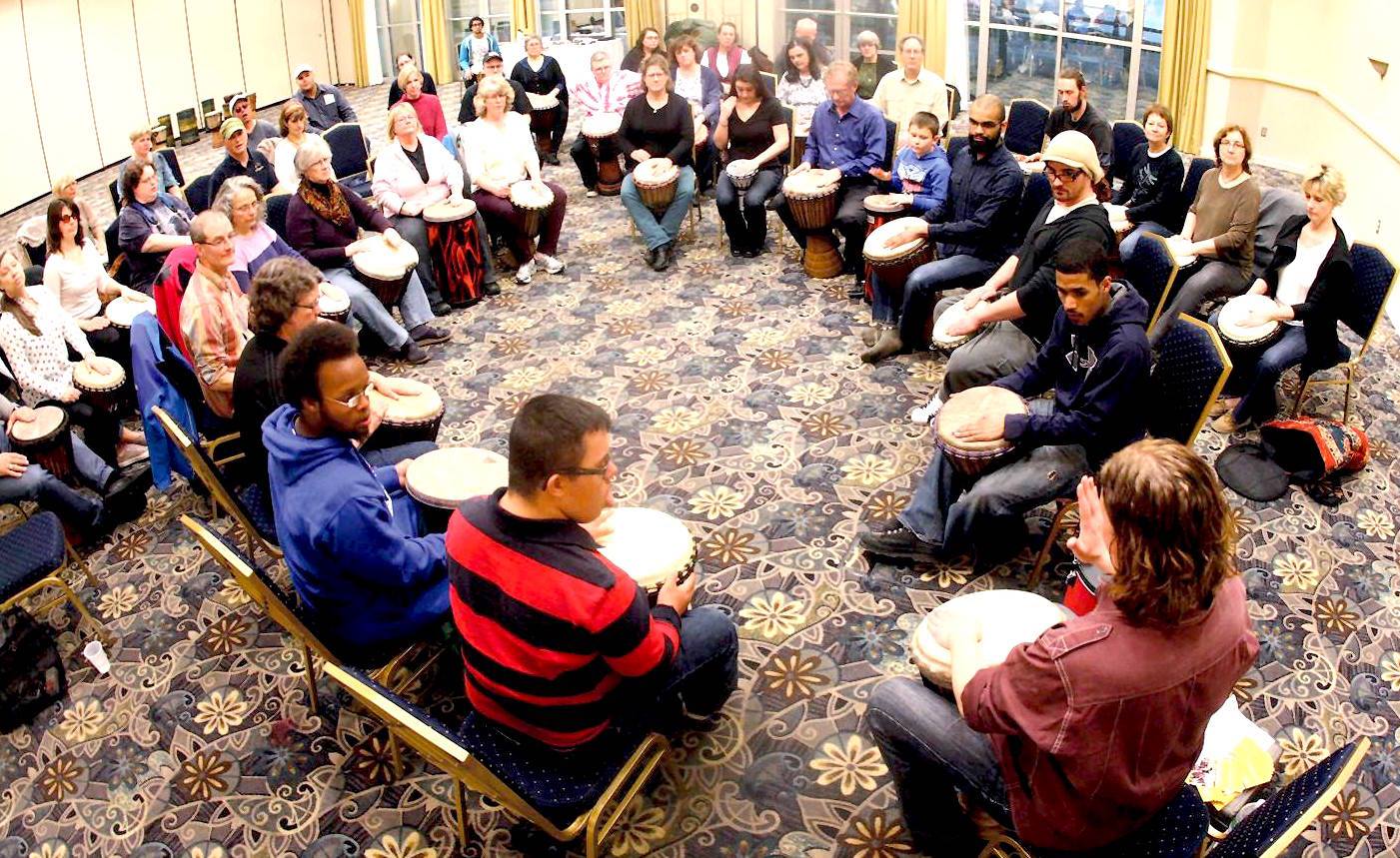
Studies on heart-rate synchrony reveal that steady, group-driven rhythms can align heart-rate variability across participants—a sign of deeper autonomic regulation [5].
At the same time, breath often begins syncing with the beat, supported by research showing that coupling breath to rhythm strengthens vagal tone and supports calm states [6].
All of this happens without anyone talking about connection, trust, or openness.
The rhythm handles it.
A single, steady beat becomes a physiological signal telling your brain, “You’re safe here. These people are with you, not against you.”
That’s why strangers in a drum circle often smile sooner, relax faster, and show more cooperation than they would in almost any other social setting.
When timing aligns, self-protection loosens.
When timing aligns, people start relating without effort.
And when timing aligns, trust arrives through the body first, not the mind.
That’s the part many people feel but can’t name.
The groove doesn’t just create music.
It creates a temporary nervous-system agreement among everyone in the circle.
In closing, here’s the quick takeaway:
A steady beat reduces uncertainty in the brain.
Shared timing increases bonding chemistry.
Synchrony lowers anxiety.
Heart and breath begin matching the group.
And together, these mechanisms make total strangers feel connected—fast.
If this kind of shift speaks to you, come experience it in the room.
You can check my live drumming schedule here — there’s nothing like feeling the groove settle in real time.
References
[1] Nozaradan, S., et al. (2012). Neural entrainment to rhythm. Journal of Neuroscience.
[2] Koelsch, S. (2014). Music and the limbic system. Nature Reviews Neuroscience.
[3] Tarr, B., Launay, J., & Dunbar, R. (2014). Synchrony and bonding. Biology Letters, 10(10).
[4] Koole, S. L., & Tschacher, W. (2016). Synchrony and anxiety reduction. Current Opinion in Psychology.
[5] Vickhoff, B., et al. (2013). Heart-rate synchrony in group rhythm. Frontiers in Psychology, 4, 334.
[6] Meyer, M., et al. (2019). Rhythm, breath, and regulation. Frontiers in Human Neuroscience, 13, 352.
Author
